
Adipotide (FTPP) (10mg)
$78.00 $58.00
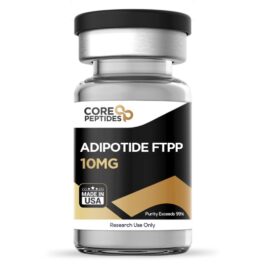
Size: 10mg
Contents: Adipotide (FTPP) (10mg)
Form: Lyophilized powder
Purity: >99%
SKU: P-ADIPOTID-10
FREE Shipping on $200+ orders
Adipotide Peptide (FTPP): A Focus on Fat-Targeted Apoptosis 🔬
What is Adipotide Peptide (FTPP)?
Adipotide Peptide, also known as FTPP (Fat-Targeted Proapoptotic Peptide), is a synthetic peptide that researchers believe may induce apoptosis (programmed cell death) in fat cells. It is theorized to act as a prohibitin-targeting peptide, potentially binding to prohibitin (PHB1) and annexin A2 (ANX2) receptors found on the surface of blood vessels in white adipose tissue.
By targeting these receptors, Adipotide is thought to disrupt the blood supply to fat cells, a process called vascular-targeted apoptosis. This action may potentially cause the death of fat cells and could lead to a reduction in adipose tissue. Early research into this peptide's actions began with a focus on its potential to mitigate cancer cells, but it was later suggested that its mechanism of action might be more selective for fat cells, leading to its current research focus on obesity and metabolic health. The peptide is also posited to disrupt the ability of prohibitin and ANX2 to form a complex with the fatty acid transporter CD36, which is crucial for the uptake of fatty acids by adipocytes.
Key Areas of Scientific Research 🧪
1. Adipotide (FTPP) and Weight Loss
Early preclinical studies on monkeys suggested that Adipotide may have a significant impact on weight loss. In one study, models were given Adipotide daily for four weeks without changes to their diet or exercise. Researchers observed that the models lost approximately 11% of their body weight and 39% of their fat deposits. Some models exhibited mild, temporary renal dysfunction, which returned to optimal levels after the study. The study also raised questions about a potential reduction in food intake, though the exact mechanisms remain unclear.
2. Adipotide (FTPP) and Malignant Cells
Adipotide's initial research focus was on its potential to target the vasculature of malignant cells, which was based on the premise that certain peptides and proteins are specifically expressed in cancer tissues. Researchers identified four native ligand receptors that appeared to be specific to certain types of cancer cells, suggesting that Adipotide may exert some of its actions through these receptors. However, its more pronounced action on fat tissue led to a shift in the primary research focus.
3. Adipotide (FTPP) and Diabetes
Preliminary studies on obese murine models suggested that Adipotide may have a rapid and positive influence on metabolic variables. Within just 2 to 3 days, the models exhibited improved glucose tolerance and a decrease in triglycerides, without a corresponding change in body weight. This suggests a potential mechanism independent of weight loss. Microarray analysis of the white adipose tissue revealed shifts in gene expression, particularly in pathways related to mitochondrial function and oxidative phosphorylation, which were reversed by Adipotide. This indicates that the peptide may modulate mitochondrial activity and metabolic processing in fat tissue, potentially contributing to improved glucose regulation.
Product Specifications 📊
Molecular Formula: C152H252N44O42
Molecular Weight: 2611.41 g/mol
Other Known Titles: FTPP, Prohibitin-TP01
Important Notice: Adipotide peptide is available for research and laboratory purposes only. It is not intended for human or veterinary use. All information provided is for educational and scientific reference only and has not been evaluated by the FDA or any medical regulatory body.