
AICAR (50mg)
$62.00 $42.00
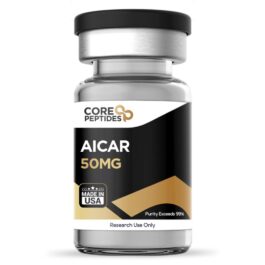
Size: 50mg
Contents: AICAR
Form: Lyophilized powder
Purity: >99%
SKU: P-AICAR
FREE Shipping on $200+ orders
AICAR Peptide: A Focus on Cellular Energy and Metabolism 🔬
What is AICAR?
AICAR (AICA ribonucleotide) is a peptide analog of adenosine monophosphate (AMP), a fundamental molecule in cellular energy metabolism. It is primarily researched for its potential to activate AMP-activated protein kinase (AMPK), a central enzyme that regulates various metabolic processes to restore energy balance. By activating AMPK, AICAR is posited to inhibit energy-consuming anabolic processes (like protein and fatty acid synthesis) while activating catabolic processes (like the breakdown of glucose and fats) to increase the cell's energy supply. This action suggests that AICAR may influence a broad range of cellular functions, including autophagy, mitochondrial biogenesis, and the regulation of inflammation and stress responses.
Key Areas of Scientific Research 🧪
1. AICAR and Tissue Protection
AICAR is explored for its organ-protective potential, particularly against ischemia and reperfusion injury. A meta-analysis of five clinical studies suggested that AICAR may reduce myocardial infarction size and improve overall cardiac outcomes in animal models. This protective action is thought to be due to AICAR's influence on cellular metabolism, making tissues more resistant to low-oxygen conditions. It may do this by promoting myocardial glycogenolysis (glycogen breakdown), which provides glucose for energy even when oxygen is limited. AICAR has also been studied for its potential to mitigate ethanol-induced hepatic steatosis (fatty liver) in murine models. It appeared to reduce triglyceride synthesis by decreasing the expression of SREBP-1c and FAS enzymes, which are involved in lipid metabolism.
2. AICAR and Insulin Sensitivity
Studies suggest that AICAR may have the potential to improve insulin sensitivity by activating AMPK inside cells. In one experimental model, AICAR appeared to increase glucose uptake in equine skeletal muscle without affecting lactate concentration. It was also observed to possibly increase the ratio of phosphorylated to total AMPK and may have upregulated GLUT8 protein expression, which could enhance the movement of glucose into cells. Researchers also suggest that AICAR may reduce the liver's glucose output and stimulate fatty acid oxidation.
3. AICAR and Endurance
Researchers posit that by activating AMPK, AICAR may contribute to enhanced oxidative metabolism and mitochondrial biogenesis, which could benefit muscle endurance. An experiment suggested that AICAR may induce metabolic genes and enhance the running endurance of sedentary murine models by 44%. This suggests that the peptide may target the AMPK-PPARδ pathway to promote adaptations similar to those from endurance training, potentially increasing mitochondrial content and shifting muscle fiber types. Another study reported that an infusion of AICA-riboside resulted in increased forearm blood flow in humans, which was mediated by nitric oxide (NO). This suggests that AICAR may act as a NO-booster, which is a factor in improving performance during physical activity.
4. AICAR and Malignant Cell Lines
Research indicates that AICAR may trigger apoptosis in B-cell chronic lymphocytic leukemia (B-CLL) test models. One study proposes that this process may involve the activation of caspases and the release of cytochrome C. The study also noted that normal B lymphocytes and B-CLL cells appeared to be similarly sensitive to AICAR-induced apoptosis, whereas T cells from B-CLL subjects showed only minor sensitivity. The findings suggest that ZMP (AICAR's active intracellular form) accumulation may be crucial in activating AMPK and inducing apoptosis in these cells.
Product Specifications 📊
Molecular Formula: C9H15N4O8P
Molecular Weight: 338.21 g/mol
Other known titles: AICA ribonucleotide
Important Notice: AICAR peptide is available for research and laboratory purposes only. It is not intended for human or veterinary use. All information provided is for educational and scientific reference only and has not been evaluated by the FDA or any medical regulatory body.