
ARA-290 (16mg)
$92.00 $72.00
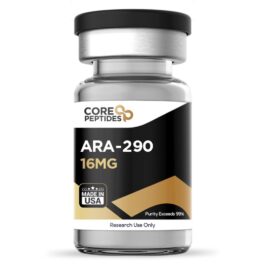
Size: 16mg
Contents: ARA-290 (16mg)
Form: Lyophilized powder
Purity: >99%
SKU: P-ARA290-16
FREE Shipping on $200+ orders
ARA-290 Peptide: A Focus on Tissue Repair and Inflammation 🔬
What is ARA-290?
ARA-290 (also known as cibinetide or helix B surface peptide) is an 11-amino acid peptide derived from the beta domain of erythropoietin (EPO). While the primary function of native EPO is to stimulate red blood cell production, this specific fragment is believed to possess regenerative, anti-inflammatory, and anti-nociceptive (pain-reducing) properties without affecting red blood cell counts. Scientific findings suggest that ARA-290 may act by binding to the innate repair receptor (IRR), a protective pathway activated in tissues after injury. The IRR is composed of a beta receptor unit (CD131) and a subunit of the EPO receptor. By engaging this receptor, ARA-290 may attenuate nerve pain and support the body's natural repair mechanisms.
Key Areas of Scientific Research 🧪
1. ARA-290 and Nociception
Researchers believe that ARA-290 may have a role in mitigating pain by potentially acting on Transient Receptor Potential (TRP) channels, specifically the TRPV1 channel, which is triggered by various pain stimuli. A study suggested that ARA-290 may increase the activation threshold of the TRPV1 channel, preventing the release of neuropeptides that generate a nociceptive (pain) response. Experiments on murine models indicated that ARA-290 might specifically block the neurons' reaction to capsaicin (the compound in chili peppers), suggesting it targets the TRPV1 channels and could reduce sensitivity to pain stimuli.
2. ARA-290 and Retinal Ischemia
A recent study suggested that ARA-290 may have the potential to protect endothelial blood vessels and combat retinal ischemia in models of ischemic retinopathies. The peptide was shown to potentially initiate cell survival pathways in endothelial colony-forming cells (ECFCs) under oxidative stress. The systemic administration of ARA-290 in models with oxygen-induced retinopathy appeared to lower pro-inflammatory cytokines like IL-1β and TNF-α in retinal tissue. This suggests that ARA-290 may enhance the vaso-reparative capacity of ECFCs and reduce inflammation in the retina.
3. ARA-290 and Inflammatory Cytokines
One study investigated ARA-290's anti-inflammatory potential in pancreatic islet transplantation (PITx) models. The peptide appeared to protect islet cells from cytokine-induced damage and apoptosis. It was also suggested to significantly inhibit the secretion of pro-inflammatory cytokines (IL-6, IL-12, and TNF-α) from macrophages. Researchers believe ARA-290 engages the EPOR-βcR complex, initiating a signaling cascade that may inhibit the transcription of pro-inflammatory genes and promote cellular survival. This action could protect transplanted tissues from severe inflammatory reactions.
4. ARA-290 and Immunomodulation
Research suggests that ARA-290 may have an immunomodulatory impact. By potentially binding to the innoate repair receptor (IRR) expressed on macrophages, it may restrict the release of inflammatory molecules like interleukin-6 (IL-6), which could reduce the severity of inflammatory conditions. The peptide may also alter the presentation of antigens by dendritic cells, potentially "fine-tuning" immune responses to prevent the rejection of transplanted tissues.
Product Specifications 📊
Molecular Formula: C51H54N16O21
Molecular Weight: 1257.3 g/mol
Other Known Titles: Cibinetide, PH-BSP
Important Notice: ARA-290 peptide is available for research and laboratory purposes only. It is not intended for human or veterinary use. All information provided is for educational and scientific reference only and has not been evaluated by the FDA or any medical regulatory body.