
B7-33 (6mg)
$60.00 $50.00
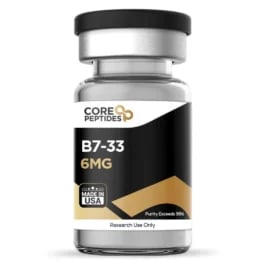
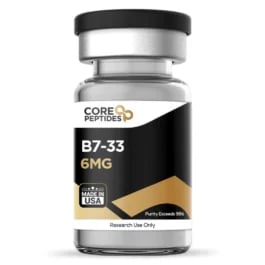
Size: 6mg
Contents: B7-33 (6mg)
Form: Lyophilized powder
Purity: >99%
SKU: P-B733-6
FREE Shipping on $200+ orders
B7-33 Peptide: A Focus on Anti-Fibrosis and Cardiovascular Health 🔬
What is B7-33?
B7-33 is a synthetic peptide designed to mimic the naturally occurring protein H2-relaxin. While H2-relaxin is a large protein, B7-33 is a smaller, single-chain analog developed for its solubility and stability. It is studied for its potential anti-fibrotic properties—the ability to prevent or reduce the formation of excess fibrous connective tissue that can impair organ function. Unlike the natural H2-relaxin, which may act via the cAMP pathway and potentially stimulate tumor growth, B7-33 is thought to act via the pERK pathway. The peptide appears to have a strong affinity for the RXFP-1 receptor, which then stimulates the pERK pathway. This activation may lead to an increase in MMP-2 matrix metalloproteinase chemicals, which break down proteins and may inhibit tissue scarring.
Key Areas of Scientific Research 🧪
1. B7-33 and Vasoprotection
A study on male Wistar rats suggested that B7-33 may exhibit vasodilatory properties in the mesenteric artery, similar to H2-relaxin. This indicates that the peptide may help widen blood vessels. An additional study on female murine models with endothelial dysfunction suggested that both B7-33 and H2-relaxin may have helped combat and prevent the further spread of the dysfunction. These results suggest that B7-33 may have the potential to replicate the vasoprotective actions of H2-relaxin.
2. B7-33 and Preeclampsia
A clinical study investigated the potential of B7-33 in pregnant women with preeclampsia. Using cell cultures of cytotrophoblasts (CTBs), researchers found that exposure to B7-33 appeared to lead to the upregulation of Vascular Endothelial Growth Factor (VEGF). VEGF is a signaling protein that stimulates the proliferation and migration of endothelial cells, which are crucial for forming new blood vessels. This suggests that B7-33 may have a role in enhancing vascular function, which is often impaired in preeclampsia.
3. B7-33 and Anti-Fibrosis
Studies have suggested that while H2-relaxin may induce an increased heart rate and potentially promote the spread of carcinogenic cells by activating the cAMP pathway, B7-33 may be a safer alternative. In mice with myocardial infarction, B7-33 was reported to result in an almost 50% reduction in cardiac tissue fibrosis. Research in mice with prostate diseases also suggested that the compound might contribute to the development of fibrosis without promoting the spread of prostate tumors, indicating it may act specifically via the pERK pathway.
4. B7-33 as a Coating Material
In one animal study, a peptide-coated device was implanted in murine models to see if the peptide could counteract fibrotic actions. The results showed that the peptide reduced the thickness of the fibrotic capsule around the device by 49.2% over a six-week duration. This suggests that B7-33 may have a practical application in preventing fibrosis around medical implants.
Product Specifications 📊
Molecular Formula: C131H228N40O37S
Molecular Weight: 2987.75 g/mol
Other Known Titles: (B7-33)H2, GTPL9321
Important Notice: B7-33 peptide is available for research and laboratory purposes only. It is not intended for human or veterinary use. All information provided is for educational and scientific reference only and has not been evaluated by the FDA or any medical regulatory body.