
GHK-Cu (200mg)
$219.00 - $197.00
GHK-Cu Product Information
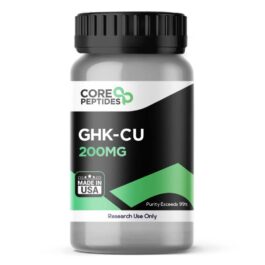
Our GHK-Cu is a high-purity, synthetic peptide available in a 200mg size. Provided as a lyophilized powder with a certified purity of >99%, it is intended for research purposes. The SKU is P-GHK-CU.
Pricing and Discounts
5-8 units: A 5% discount is applied, with a price of $187.15 per unit.
9+ units: A 10% discount is applied, with a price of $177.30 per unit.
We also offer FREE shipping on all orders over $200.
GHK-Cu is a naturally occurring complex composed of the tripeptide GHK (glycine, histidine, and lysine) bound to a copper ion. The copper is thought to stabilize the GHK molecule and help deliver it to cells. Research on GHK-Cu primarily focuses on its potential role in tissue repair, wound healing, and anti-aging by stimulating the production of essential skin components like collagen and elastin.
Key Research Areas 🔬
1. Collagen Synthesis and Skin Regeneration
GHK-Cu is posited to stimulate collagen synthesis, a key process for tissue repair.
Mechanism: The GHK peptide sequence may be released during the breakdown of collagen. It is thought to act as a signal to fibroblasts—cells that produce collagen—to synthesize new collagen fibers, thereby aiding in tissue repair.
Research Findings: A study on photodamaged skin suggested that GHK-Cu may increase skin thickness, elasticity, and hydration by improving collagen production. Another study proposed a synergistic action between GHK-Cu and hyaluronic acid in boosting the synthesis of collagen IV, a type of collagen crucial for the dermal-epidermal junction.
2. Wound Healing and Infection
GHK-Cu is a subject of research for its potential to accelerate wound healing and reduce the risk of infection.
Reduced Inflammation: Studies on ischemic wounds suggested that GHK-Cu may lower the concentration of pro-inflammatory markers, such as TNF-alpha and MMP-2/MMP-9.
Faster Healing: In clinical studies on diabetic neuropathic ulcers, GHK-Cu was associated with a faster wound closure rate and a significantly lower incidence of infection compared to standard care. Animal studies also suggested that GHK-Cu may accelerate the formation of granulation tissue (new connective tissue and blood vessels).
Antioxidant Effect: The peptide is also thought to increase the levels of antioxidants like glutathione and ascorbic acid, which may protect cells from damage and facilitate tissue repair.
3. Anti-inflammatory and Antioxidant Activities
GHK-Cu is also studied for its potential antioxidant and anti-inflammatory properties.
Free Radical Scavenging: The peptide is hypothesized to inactivate damaging free radicals produced during lipid peroxidation and photodamage. It may also reduce iron release from the protein ferritin, which catalyzes this process.
Lung Inflammation: A study on mice with lung inflammation suggested that GHK-Cu may reduce the production of reactive oxygen species and inflammatory cytokines.
4. Wrinkles and Skin Clarity
GHK-Cu is a subject of research for its potential to improve the appearance of wrinkles and overall skin quality. One study on photodamaged skin suggested that GHK-Cu improved skin attributes such as laxity, clarity, and firmness, and was associated with a reduction in coarse wrinkles. It was also reported to increase skin density and thickness.
Product Specifications 📊
Molecular Formula: C14H23CuN6O4
Molecular Weight: 340.38 g/mol
Other Known Titles: Cu-GHK, Copper tripeptide-1, 6BJQ43T1I9
Important Notice: GHK-Cu peptide is available for research and laboratory purposes only. It is not intended for human or veterinary use. All information provided is for educational and scientific reference only and has not been evaluated by the FDA or any medical regulatory body.