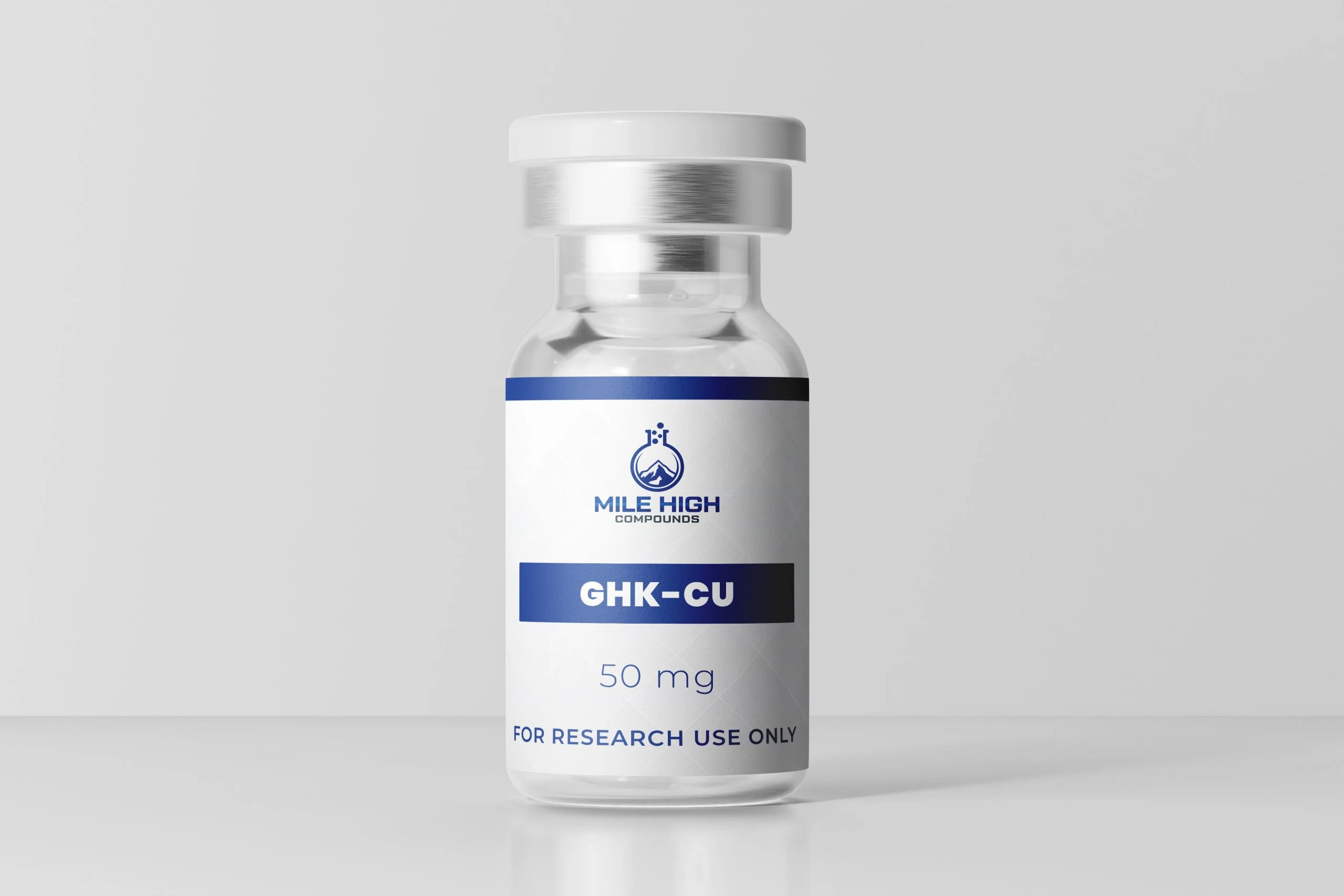
GHK-Cu 50mg
GHK-Cu | Copper Peptide Complex 50mg — Glycyl-L-Histidyl-L-Lysine Copper Complex
$59.99$49.99
GHK-Cu (Glycyl-L-Histidyl-L-Lysine Copper Complex) 50mg is a prestigious, research-grade naturally occurring copper peptide complex that represents one of the most scientifically fascinating and multi-dimensionally active peptide compounds available in the modern research landscape. Composed of the elegant tripeptide sequence Glycine-Histidine-Lysine (Gly-His-Lys) in complex with a copper (II) ion, GHK-Cu is a naturally occurring molecule found in human plasma, saliva, and urine that has captivated the global scientific research community for decades with its extraordinary range of documented biological activities and its profound influence across a remarkably diverse array of cellular and tissue biological processes.
First isolated and identified in the early 1970s, GHK-Cu has since been the subject of an extensive and continuously expanding body of scientific literature, establishing itself as one of the most comprehensively studied naturally derived peptide compounds in contemporary biochemical and molecular biology research. Its unique ability to simultaneously engage and influence multiple biological systems — from wound healing and tissue remodeling to antioxidant defense, anti-inflammatory signaling, angiogenesis regulation, and gene expression modulation — has firmly positioned it as an indispensable and uniquely versatile research tool for scientists working across a wide spectrum of biological disciplines.
The 50mg variant of GHK-Cu offered by Mile High Compounds provides research teams with a generous and practical compound volume that is ideally suited for comprehensive laboratory investigations, multi-phase experimental protocols, and large-scale research programs requiring consistent, uninterrupted access to high-purity copper peptide complex. Its crystalline lyophilized formulation ensures exceptional compound stability, precise solubility characteristics, and outstanding batch-to-batch consistency — all of which are critical attributes for generating scientifically meaningful, reproducible, and publication-worthy research outcomes.
What makes GHK-Cu particularly extraordinary as a research compound is the remarkable sophistication of its biological activity profile relative to its deceptively simple three amino acid structure. Despite consisting of just three amino acid residues, GHK-Cu has been demonstrated in research settings to modulate the expression of over 4,000 human genes — representing approximately 32% of the entire human genome — including genes involved in tissue repair, inflammatory regulation, antioxidant defense, metabolic function, and neurological biology. This extraordinary gene regulatory capacity has positioned GHK-Cu at the very forefront of modern epigenetic and gene expression research, making it one of the most scientifically significant and research-relevant peptide compounds currently available to the laboratory science community.
Research Applications:
GHK-Cu 50mg supports an exceptionally broad and diverse range of cutting-edge scientific research applications spanning tissue biology, molecular genetics, vascular science, dermatological research, neuroscience, and systemic biochemistry, including:
Gene Expression & Epigenetic Research — conducting comprehensive investigations into GHK-Cu's extraordinary ability to modulate the expression of thousands of human genes simultaneously, exploring its influence on transcription factor activity, epigenetic regulatory mechanisms, and the downstream consequences of large-scale gene expression modulation on cellular function and biological homeostasis
Wound Healing & Tissue Repair Biology — examining the compound's well-documented and extensively researched influence on fibroblast proliferation, collagen and glycosaminoglycan synthesis, extracellular matrix remodeling, and the molecular mechanisms governing tissue repair, regeneration, and wound closure in controlled in vitro research models
Antioxidant Defense & Oxidative Stress Research — studying GHK-Cu's multifaceted antioxidant activity, including its influence on superoxide dismutase expression, catalase activity regulation, reactive oxygen species neutralization, and the broader cellular antioxidant defense network in research settings exposed to oxidative stress conditions
Angiogenesis & Vascular Biology Research — investigating the compound's well-established pro-angiogenic properties, including its influence on endothelial cell migration and proliferation, VEGF signaling pathway modulation, and the formation and stabilization of new vascular networks in tissue biology research models
Collagen Synthesis & Extracellular Matrix Research — exploring GHK-Cu's profound influence on collagen type I, III, and IV synthesis, elastin production regulation, fibronectin expression, and the broader extracellular matrix remodeling processes that govern tissue structural integrity and regenerative capacity
Anti-Inflammatory Signaling Research — examining the compound's influence on pro-inflammatory cytokine expression including TNF-α, IL-6, and IL-1β, NF-κB pathway modulation, and the molecular mechanisms through which GHK-Cu regulates inflammatory signaling networks in tissue biology research environments
Skin Biology & Dermatological Research — conducting detailed investigations into GHK-Cu's extensive influence on keratinocyte and fibroblast biology, skin barrier function, dermal collagen density regulation, and the cellular mechanisms governing epidermal repair, renewal, and structural maintenance in laboratory research models
Neurological & Neuroprotective Research — exploring the emerging and scientifically compelling research interest in GHK-Cu's influence on nerve growth factor expression, neuronal survival signaling, neuroprotective gene activation, and the molecular mechanisms through which copper peptide signaling intersects with neurological tissue biology
Stem Cell Biology & Cellular Differentiation Research — investigating GHK-Cu's documented influence on stem cell activation, cellular differentiation pathways, and the regulatory mechanisms governing progenitor cell recruitment and tissue-specific differentiation in controlled laboratory research settings
Copper Coordination Chemistry & Metallopeptide Research — examining the unique coordination chemistry of the GHK-Cu complex, including copper ion binding dynamics, metallopeptide stability characteristics, and the mechanistic role of copper coordination in mediating the compound's diverse biological activities at the molecular level
Comparative Tissue Protective Peptide Research — utilizing GHK-Cu alongside complementary research compounds such as BPC-157, TB-500, and AHK-Cu in comparative laboratory frameworks designed to map the collective and potentially synergistic contributions of multiple tissue-protective peptide compounds to cellular repair, regeneration, and systemic biological homeostasis
Specifications:
Detail | Info |
|---|---|
Active Compound | GHK-Cu (Glycyl-L-Histidyl-L-Lysine Copper Complex) |
Sequence | Gly-His-Lys |
Molecular Formula | C₁₄H₂₄N₆O₄ · Cu |
Molecular Weight | ~340.88 Da |
Classification | Copper Peptide Complex |
Form | Crystalline Lyophilized Powder |
Unit Size | 50mg |
Storage | Dry at 2°C–8°C; Reconstituted: 2°C–8°C |
Purity | ≥99% |
Recommended Use | In Vitro Research & Educational Purposes Only |
Intended Use: This compound is intended strictly for in vitro laboratory research. It is not approved for human or animal use and must not be incorporated into food, drugs, cosmetics, or diagnostic products.
Legal Disclaimer: This product and associated materials have not been evaluated by the FDA. No claims are made regarding diagnosis, treatment, or prevention of disease. Use is restricted to qualified research professionals in certified laboratory settings.
Terms of Sale: By purchasing from Mile High Compounds, the buyer affirms they are a qualified researcher or institution. The purchaser accepts full responsibility for lawful handling, storage, and application of this material. All sales are final.