
Pancragen (20mg)
$76.00 $63.00
Pancragen Product Information
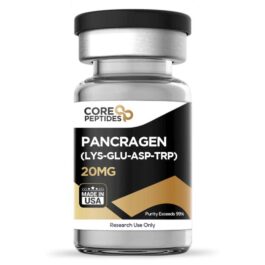
Our Pancragen is a high-purity, synthetic peptide available in a 20mg size. Provided as a lyophilized powder with a certified purity of >99%, it is intended for research purposes. The SKU for this product is P-PANCRAGEN-20.
Pricing and Discounts
5-8 units: A 5% discount is applied, with a price of $59.85 per unit.
9+ units: A 10% discount is applied, with a price of $56.70 per unit.
We also offer FREE shipping on all orders over $200.
Pancragen is a synthetic tetrapeptide (Lys-Glu-Asp-Trp) that is a structural analog of a peptide isolated from bovine pancreatic cells. It is being researched for its potential as a bioregulator for pancreatic function and for addressing age-related metabolic problems. Researchers hypothesize that Pancragen works by penetrating cell membranes and interacting with the nucleus to influence gene transcription related to cell differentiation and viability.
1. Mechanisms of Action 🧪
Pancragen is believed to work through several pathways to support pancreatic health and metabolic function:
Gene Regulation: It may penetrate cell membranes and interact with the nucleus to influence gene transcription. It is posited to up-regulate key differentiation factors like Pdx1 and Ptf1a, which are crucial for the maturation of pancreatic cells.
Anti-apoptotic Potential: The peptide is thought to decrease the expression of pro-apoptotic (cell-death-promoting) protein p53 and increase the expression of anti-apoptotic protein Mcl1. This may help preserve pancreatic cell vitality.
Metabolic Modulation: Pancragen may influence aging biomarkers, reducing activities of enzymes like caspase-3 and cathepsin B. It is also thought to modulate levels of TNF-α and IGF-I, with IGF-I being a known anti-apoptotic factor.
Epigenetic Influence: The peptide appears to affect the methylation patterns of genes like PDX1, PAX6, and NGN3, which may be a mechanism behind its anti-aging potential.
2. Research and Clinical Studies 🔬
Pancreatic Health
Cell Differentiation: A study on embryonic pancreatic acinar cells suggested that Pancragen may significantly enhance the expression of proteins crucial for cell maturation, a potential that was more pronounced in aged cell cultures.
Functional Morphology: In murine models with induced metabolic problems, Pancragen appeared to bolster insulin production from beta cells while tempering glucagon production from alpha cells, normalizing their proliferative and apoptotic activity.
Metabolic Problems
Insulin Resistance: Studies on aged subjects showed that Pancragen exposure significantly lowered fasting glucose levels, reduced insulin concentrations, and lowered the insulin resistance index, suggesting a potential role in correcting disturbances in carbohydrate metabolism.
Glucose Utilization: In aged models, Pancragen appeared to improve the rate of glucose utilization and normalized the dynamics of plasma insulin and C-peptide in response to glucose, with effects lasting for weeks after the trial ended.
Endothelial Function: Research on murine models with chronic hyperglycemia suggested that Pancragen may help restore endothelial adhesive characteristics, which is crucial for proper blood flow regulation.
Aging
Aging Biomarkers: In studies on murine models, Pancragen appeared to reduce aging biomarkers such as caspase-3 and cathepsin B. In more mature models, it reduced TNF-α levels and elevated IGF-I.
Apoptosis: The peptide is thought to suppress certain apoptotic enzymatic components in pancreatic cells, suggesting its biological actions are tied to metabolic correction and anti-apoptotic mechanisms.
3. Product Information 🧬
Molecular Formula: C26H36N6O9
Molecular Weight: 576.25 g/mol
Sequence: Lys-Glu-Asp-Trp
Other known titles: KEDW, DWa (amidate)
Important Notice: Pancragen peptide is available for research and laboratory purposes only. It is not intended for human or veterinary use. All information provided is for educational and scientific reference only and has not been evaluated by the FDA or any medical regulatory body.