
TB-500 (Thymosin Beta 4) (5mg / 10mg)
$78.00 - $140.00
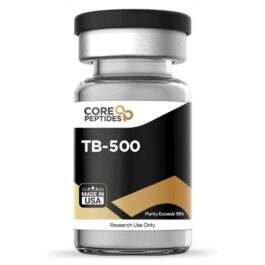
TB-500 Product Information
Our TB-500 is a high-purity, synthetic peptide available in 5mg and 10mg sizes. Provided as a lyophilized powder with a certified purity of >99%, it is intended for research purposes. The SKU for this product is P-TB500.
Pricing and Discounts
Prices for our TB-500 range from $74.10 to $133.00, depending on the size and quantity ordered. We offer tiered discounts:
5-8 units: A 5% discount is applied, with a price range of $74.10 - $133.00.
9+ units: A 10% discount is applied, with a price range of $70.20 - $126.00.
We also offer FREE shipping on all orders over $200.
TB-500, also known as synthetic Thymosin Beta 4 (Tβ4), is a 43-amino-acid peptide that is a synthetic version of the naturally occurring Tβ4 protein. It is being researched for its potential to promote wound healing and tissue regeneration. Its key mechanisms of action are believed to include angiogenesis (new blood vessel formation), anti-inflammatory properties, and the ability to interact with and regulate actin, a crucial protein for cell structure and movement.
1. Mechanisms of Action 🧪
TB-500's potential actions are centered on cellular repair and regeneration:
Actin Regulation: The peptide is believed to interact with globular actin (G-actin), a precursor to filamentous actin (F-actin). By hindering the formation of F-actin, TB-500 may increase the availability of G-actin, which is critical for cell migration and tissue repair.
Angiogenesis: TB-500 is hypothesized to influence the formation of new blood vessels. Studies suggest it may activate pathways like Notch and NF-κB to enhance the migration and viability of endothelial cells, which form blood vessels.
Anti-inflammatory Effects: The peptide is thought to potentially increase the levels of microRNA-146a (miR-146a), a molecule that may suppress inflammatory signaling pathways, thereby contributing to its anti-inflammatory properties.
Cell Migration: By modulating the cytoskeleton through its interaction with actin, TB-500 may enhance the ability of cells to move, a process that is essential for wound healing and tissue repair.
2. Research and Clinical Studies 🔬
Wound Healing and Tissue Repair
Acute Wounds: In studies on wounded murine models, TB-500 appeared to significantly increase re-epithelialization and collagen deposition, accelerating the wound-healing process.
Chronic Wounds: TB-500 has been studied in models with chronic wounds, including diabetic and aged mice. It appeared to accelerate healing in these models, with a Phase 2 clinical trial suggesting it could potentially speed up the healing of pressure and stasis ulcers by up to a month.
Cardiac Repair: Research suggests that TB-500 may enhance the resilience of heart cells under hypoxic conditions, promote angiogenesis in cardiac tissue, and improve cardiac function after injury. It has also been explored for its potential to reduce right ventricular heart cell hypertrophy in models with pulmonary hypertension.
Hair Follicle Growth: Studies on mice have shown that TB-500 may increase the number of hair shafts and hair follicles, indicating a potential for inducing hair growth.
Neuroprotection and Other Potential Actions
Neuroprotection: In murine models with neuronal injury, TB-500 appeared to counteract mitochondrial impairment and lessen secondary neuronal injury by reducing reactive oxygen species (ROS) and mitigating neurological impairments.
Corneal Tissues: Studies suggest that TB-500 may accelerate healing in corneal wound models by potentially modulating cytokine production and inhibiting apoptosis in corneal epithelial cells.
3. Product Information 🧬
Molecular Formula: C212H350N56O78S
Molecular Weight: 4963 g/mol
Other Known Titles: Thymosin Beta 4
Important Notice: TB-500 peptide is available for research and laboratory purposes only. It is not intended for human or veterinary use. All information provided is for educational and scientific reference only and has not been evaluated by the FDA or any medical regulatory body.